Work conditions in Japan
 国際交流センター
Japan has many laws to protect workers. These laws apply equally to both Japanese and foreign workers. If you have problems at work, there are free consultation services available to help you.
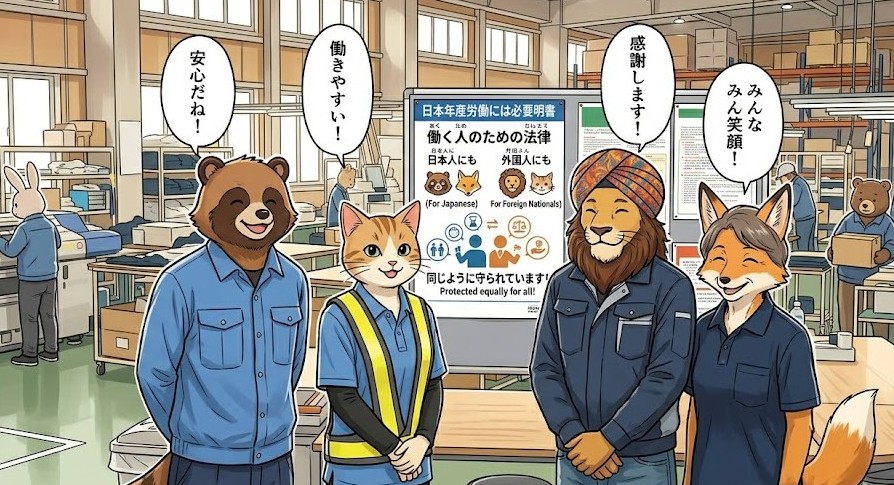
Common Workplace Problems
- Unpaid wages: You worked, but your employer did not pay you on payday.
- Sudden dismissal: Your employer suddenly tells you not to come to work anymore.
- Unpaid overtime: You worked overtime, but little or no overtime pay appears on your payslip.
- No workers’ compensation procedure: You were injured at work, but the company did not process workers’ compensation insurance.
- Unsafe working conditions: The workplace lacks proper safety measures, and the work feels dangerous.
- Unclear working conditions: The company did not clearly explain your contract or working conditions.
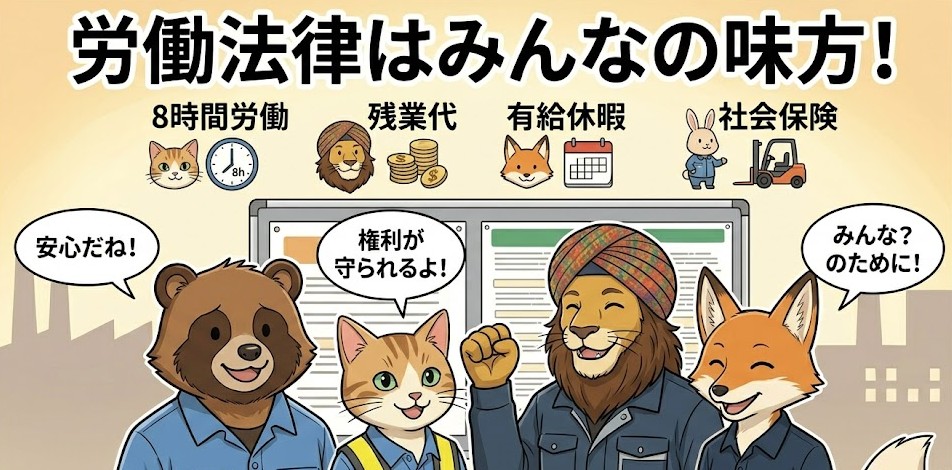
Important Points of the Labor Standards Act
- Notice of dismissal: If a company wants to dismiss you, they must give you 30 days’ notice or pay 30 days’ wages instead.
- Certificate upon leaving work: When you leave a job, you can request a certificate showing your employment period, job details, wages, and reason for leaving.
- Payment of wages: Wages should generally be paid in full, directly to the worker, at least once a month on a fixed date.
- Leave allowance: If the company forces you to take leave for company reasons, you should receive at least 60% of your average wages.
- Working hours and breaks: Standard working hours are up to 8 hours per day and 40 hours per week. Workers must receive:
- at least 45 minutes break after more than 6 hours of work
- at least 60 minutes break after more than 8 hours of work
- Extra pay for overtime, night work, and holidays: Workers receive higher pay rates for:
- overtime work
- work between 10:00 p.m. and 5:00 a.m.
- work on holidays
Example: overtime work is generally paid at 125% of the normal wage.

Important Points of the Industrial Safety and Health Act
- Safety measures: Companies must provide safety equipment and protective gear to prevent accidents and health problems.
- Safety training: New workers and workers changing positions must receive safety education and training.
- Licensed work: Dangerous work such as operating cranes or forklifts can only be done by qualified workers.
- Health checkups: Companies are required to provide regular health examinations for workers.
Workers’ Compensation Insurance
If you are injured or become ill because of work or commuting, workers’ compensation insurance can cover, medical expenses, compensation during leave from work.
If you have any work related issues for concerns
Please contact the Labour Bureaus Foreign Workers Consultation Service ( Support is available in multiple languages).
For more information, please visit:
Ministry of Health, Labour and Welfare – Foreign Worker Consultation Services
Or please feel free to contact us here at the International Center to discuss how you can access the appropriate assistance.